
Una mirada al mundo de los caballos… desde la óptica del Paso Fino Puro Puertorriqueño
El Factor X: Influencia en el tamaño del corazón y la importancia en las yeguas de cría
Gonzalo N. Reyes R
Tomado de www.registrodepadrillos.cl
Las teorías relacionadas a la crianza del caballo de carreras, que buscan criar al “mejor de los mejores”, desde la utilización temprana del inbreeding, pasando por los números de familias de Bruce Lowe (publicaciones de 1895), la teoría del dosage de Jean-Joseph Vuillier (publicaciones de 1927), el dosaje del italiano Francesco Varole (publicaciones de 1974), el dosaje de Steve Roman (1980) y la utilización de los “nicks” en los pedigrees tabulados, poseen un elemento más de estudio y fascinación por los estudiosos del tema y los soñadores del caballo perfecto. El factor X, o más específicamente, el cromosoma X, será lo que abordaremos en el presente artículo.
El caso del gran Secretariat
Secretariat es considerado por algunos, como el mejor corredor en la historia de la hípica 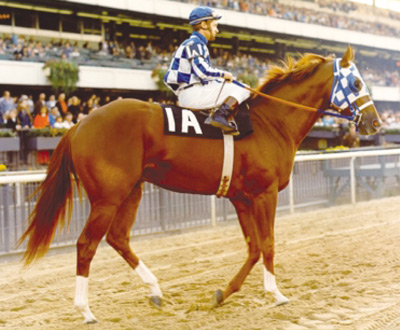 norteamericana. Este alazán hijo de Bold Ruler nació en 1970, y ganó 16 de las 21 carreras en que participó. Es uno de los 11 triplecoronados de Estados Unidos, al ganar a los 3 años el Derby de Kentucky, el Preakness y el Belmont Stakes. Fue mejor 2 aáos en 1972 y Caballo del Año en 1972 y 73, además de campeón en Pasto ese mismo año. Fue retirado por una lesión y llevado a la crianza con grandes expectativas de reproducción exitosa.
Cuando murió en 1989, dieciséis años después de haberse convertido en campeón, gran revelación fue lo que se descubrió durante su autopsia, poseía un corazón de 9,988 kilos, contrarrestado con los 3,8 kilos que en promedio posee la raza del purasangre.
En 1932, cuando murió el gran caballo australiano Phar Lap (Night Raid y Entreaty por Winkie), los 6,3 kilos del corazón de este campeón era el más grande conocido hasta la muerte de Secretariat. A partir de Phar Lap, los australianos establecieron la hipótesis de que el tamaño del corazón poseía algún tipo de relación con la capacidad corredora de los caballos, hecho que provocó en los genetistas equinos y los estudiosos de pedigree a tratar de establecer cuales son aquellos ejemplares, que por tener relación con caballos que se ha comprobado poseen el “gen del corazón grande”, podrían tener un mayor potencial corredor o un mayor valor en la reproducción. Dichos estudios han llegado a fascinantes conclusiones, que veremos no sin antes recorrer el necesario camino de los principios básicos de la transmisión genética.
Los Genes
Los genes son grandes y complejas moléculas de ADN (Ácido Desoxirribonucleico) que intervienen en diferentes funciones de las células. Mientras unos intervienen en la producción de proteínas, otros controlan la información de los sistemas biológicos, por ejemplo.
Se heredan de padres a hijos a los largo de cientos de generaciones sin sufrir modificaciones, pues las diferencias resultantes en cada individuo, se logra por la combinación de estas unidades genéticas.
Todas las células de un individuo contienen los mismos genes. Sin embargo, en los diferentes órganos, ciertos genes no actúan mientras que en otros sí. Por ejemplo, los genes que regulan la producción de hueso, están “apagados” funcionalmente en las células del hígado.
En los caballos, el ADN se localiza en los 64 cromosomas que están en cada núcleo de cada célula. En general, la diferencia genética entre dos caballos es mínima. Aunque los principios genéticos descubiertos por el monje austriaco Mendel se refieren básicamente al comportamiento de estos cromosomas nucleares, existen genes también en ciertas estructuras fuera del núcleo de las células. Estas son las llamadas mitocondrias, responsables protagónicos del proceso de transformación de energía dentro de las células. Estos genes tienen un patrón de heredabilidad diferente a la genética nuclear Mendeliana.
Las células están permanentemente dividiéndose a través del proceso llamado mitosis. Sin embargo, las células encargadas de la reproducción de la especie se diferencian de las demás células del cuerpo en cuanto que éstas se dividen por el proceso llamado meiosis, generado en los órganos sexuales, creando espermatozoides en los machos y óvulos en las hembras. Estos elementos sólo contienen la mitad de los cromosomas de una célula corporal, es decir, sólo 32 cromosomas se encuentran en cada célula reproductiva.
El sexo de un potrillo lo determina la contribución genética que proviene del padre y no de la madre. No hay ninguna otra característica genética que se conozca que sólo provenga del padre. El conjunto de los cromosomas, llamado cariotipo, no se diferencia entre el de una hembra y el de un macho, excepto en el cromosoma llamado del sexo. El cromosoma del sexo en el macho posee diferentes partes, mientras que el cromosoma del sexo en las hembras no se diferencia de los demás. El cromosoma del sexo en los machos ha sido llamado XY, mientras que el de las hembras se denomina XX y cada una de las X se asemeja a la X del cromosoma del sexo de los machos. Cuando estos cromosomas se dividen en el macho, el 50% de cada célula reproductiva o espermatozoide contiene un cromosoma Y y otro 50% un cromosoma X. Mientras en las hembras cada óvulo lleva un cromosoma de sexo X. De tal manera, que cuando un espermatozoide Y se une a un óvulo, el producto será de sexo masculino. Cuando un espermatozoide que contiene un cromosoma X se une a un óvulo que contiene otra X, el producto será una hembra.
Las implicaciones de lo anterior radican en que una hembra tendrá en su cromosoma de sexo una X del padre y otra proveniente de la madre. Un macho sólo tendrá una X proveniente de la madre y a cambio recibirá una Y del padre. Esta parte del cromosoma, es decir la Y, contiene menor cantidad de material genético que una X.
Estudios Científicos
Los australianos establecieron la hipótesis que los genes que influyen en el tamaño del corazón, estaban ligados al sexo con la mayor influencia proveniente de las madres.
El Dr. Gus Cotharn, genetista de la Universidad de Kentucky, expresó que si el gen del corazón grande estaba ligado al sexo, como creían los australianos, entonces este gen tendría que venir de una sola fuente, posiblemente a través de una mutación en el cromosoma X, proveniente de la línea femenina.
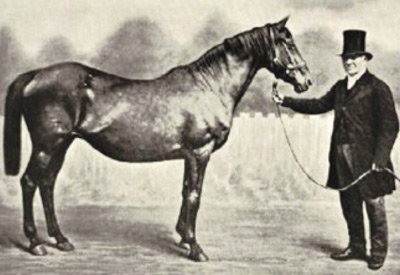 A partir del descubrimiento del enorme corazón de Secretariat, Marianna Haun empezó a investigar la fuente de corazón grande y encontró que había una yegua inglesa, nacida en 1837, llamada Pocahontas (Glencoe y Marpesa por Muley), de la cual parecía venir este gen, el cual pasaba desde el padre a hija, de hija a hija o hijo y de hijo a nieta y de hija a nieto o nieta. Es decir, seguía precisamente la genética mendeliana de transmisión del cromosoma X ligado al sexo. A la vez, Pocahontas había heredado el gen a través de las hijas del caballo Eclipse.
Resulta asombroso que el coronel Vuillier, al establecer el sistema de Chefs de Race, hubiera hecho la observación a fines del siglo XIX, que hubiere una yegua que con inusitada frecuencia aparecía en casi todos los pedigrees de los ganadores de las carreras clásicas utilizadas para escoger los Chefs de Race. Dicha yegua, es la referida Pocahontas.
Hoy en día, se ha establecido con absoluta claridad, que existe alta correlación entre un buen desempeño en un caballo de carreras y el tamaño de su corazón, hecho que es posible determinar por ecografías o electrocardiogramas (todo descrito en el libro “The Factor X, What it is and how to find it”, por Marianna Haun).
Se estableció también un esquema de puntajes o score, para relacionar el tamaño del corazón. Los caballos con tamaño normal de corazón, oscilan entre un score de 104 y 116. Las hembras que exhiben un puntaje mayor a 117, se consideran de tamaño grande. Los machos que exhiben un score de 120 o más, se consideran de corazón grande.
El Dr. Fregin, cardiólogo equino, junto con el Dr. Cotharn y la Dra. Haun, han medido más de 1000 caballos, pudiendo establecer que el factor X es 100% consistente, es decir, que no han encontrado un caballo con corazón grande que no tenga un antepasado con las mismas características. Además, una vez identificados los ejemplares que poseen este gen en el pedigree, se ha podido observar que éste ha sido heredado, precisamente siguiendo las leyes establecidas por Mendel y su funcionalidad: un gen localizado en el cromosoma X, ya sea de un macho o uno de las dos X de la hembra, o en algunos casos en cada uno de los dos X de la madre, lo que Marianna Haun llama “Double Copy Mare”.
El ejemplo práctico de Tracery
Tracery fue la obsesión de Federico Tesio en cuanto a genotipo.
La madre de Tracery, Topiari, pudo haber heredado el gen del corazón grande vía Angélica o vía Plaisanterie, ya que ésta heredó con absoluta certeza el cromosoma X de Araucaria, una hija de Pocahontas. Tracery, además contiene otros antepasados provenientes de Pocahontas, como es el caso de St. Simon, Chatanooga, el padre de Wellingtonia, Sandal, Roquebrune (posiblemente una yegua “Double Copy”), etc. Con lo que Pocahontas aparece nueve veces en su pedigree, aunque no todo este material genético tiene la capacidad de heredarse. El estudioso de pedigrees, podrá expandirlo y ver donde están ubicadas las otras fuentes de Pocahontas y determinar si éstas pueden haber sido heredadas o no. Al hacerlo, podrá entenderse a cabalidad, la transmisión de la genética del corazón grande.
Últimos comentarios